 By Monir Hossen
Getting a steady flow of leads is one of the biggest challenges for many businesses. You may have a good service, a professional website, and strong customer reviews, but getting new customers every month can still be difficult.
This is where paid advertising can help.
Unlike organic marketing, which can take time to build results, paid ads can put your business in front of people who are already searching for your products or services. When the campaigns are planned and managed properly, they can create a more reliable source of leads.
What Is Paid Advertising?
Paid advertising means paying platforms such as Google, Facebook, and Instagram to show your ads to a specific audience.
For example, a local plumbing company can use Google Ads to appear when someone searches for “emergency plumber near me.” A dental clinic can show ads to people searching for dental implants, while a cleaning company can target people looking for cleaning services in their local area.
The main benefit is simple: you can reach potential customers at the right time instead of waiting for them to discover your business naturally.
Why Businesses Use Paid Ads for Lead Generation
One major reason businesses invest in paid advertising is the ability to generate leads more consistently.
With organic marketing, your reach can change based on search rankings, social media algorithms, and how often people engage with your content. Paid campaigns give you more control over who sees your message, where they see it, and when they see it.
A well-managed campaign can help you:
- Reach people actively looking for your service
- Target specific locations
- Control your daily advertising budget
- Test different messages and offers
- Track clicks, calls, forms, and other actions
- Increase or reduce spending based on performance
However, simply running ads does not guarantee good results. The campaign needs the right strategy behind it.
Choose the Right Advertising Platform
Different platforms work better for different businesses.
Google Ads can be useful when people are already searching for a specific service. For example, someone searching for “roof repair company” already has a clear need. This can make search advertising a strong option for service businesses.
Facebook and Instagram Ads can help businesses reach people based on interests, demographics, location, and online behavior. These platforms can work well for building awareness, promoting offers, and generating demand.
The right choice depends on your business, audience, location, budget, and customer buying process.
Target the Right Audience
One of the most important parts of a successful campaign is targeting the right people.
If your ads reach people who have no interest in your service, you may get clicks without getting quality leads.
For local businesses, location targeting is especially important. You may only serve customers within certain cities, neighborhoods, or service areas. Your ads should focus on those locations instead of wasting budget outside your market.
You should also consider what your ideal customer needs, what problems they are trying to solve, and what type of search or message shows buying intent.
Your Landing Page Matters
Getting someone to click your ad is only the first step.
After clicking, the person needs to see a landing page that clearly explains what you offer and what they should do next.
A good landing page should:
- Match the message in the ad
- Clearly explain the service
- Show why customers should trust your business
- Include a clear call to action
- Make it easy to call or submit a form
- Work well on mobile devices
For example, if your ad promotes emergency plumbing, the landing page should immediately focus on emergency plumbing instead of sending visitors to a general homepage.
Track More Than Clicks
Clicks and impressions are useful, but they do not tell you whether your advertising is actually generating business.
You should track actions that matter, such as:
- Phone calls
- Contact form submissions
- Appointment requests
- Quote requests
- Purchases
- Lead form completions
Proper conversion tracking helps you understand which campaigns, keywords, ads, and landing pages are producing results.
Without reliable tracking, it becomes difficult to know where your advertising budget is going.
Focus on Lead Quality
A campaign can generate many leads and still perform poorly if most of those leads are not relevant.
For example, a roofing company may receive 50 inquiries, but if many people are asking about services the company does not provide, the number of leads alone does not tell the full story.
This is why lead quality should be part of your campaign analysis.
Look at questions such as:
- Are the leads within your service area?
- Are they looking for the services you provide?
- Are they ready to buy?
- How many leads become customers?
- Which campaigns bring the best customers?
This information can help you improve your advertising over time.
Test and Improve Your Campaigns
You should not expect your first campaign setup to be perfect.
Paid advertising requires regular testing and improvement. You can test different headlines, descriptions, offers, keywords, audiences, landing pages, and calls to action.
The goal is not to make random changes every day. Instead, use your campaign data to identify what is working and what needs improvement.
For example, if one keyword generates many clicks but very few leads, you may need to review the search intent, ad message, landing page, or keyword itself.
Set a Realistic Budget
Your advertising budget should match your market and business goals.
A small budget can still produce useful data, but expecting a large number of high-quality leads from a very limited budget may not be realistic in a competitive market.
Start with a budget you can manage consistently. Then review the results and increase spending when you have enough data and a clear understanding of what is producing valuable leads.
Consistency is often more useful than making large changes based on short-term results.
Build a Repeatable Lead Generation System
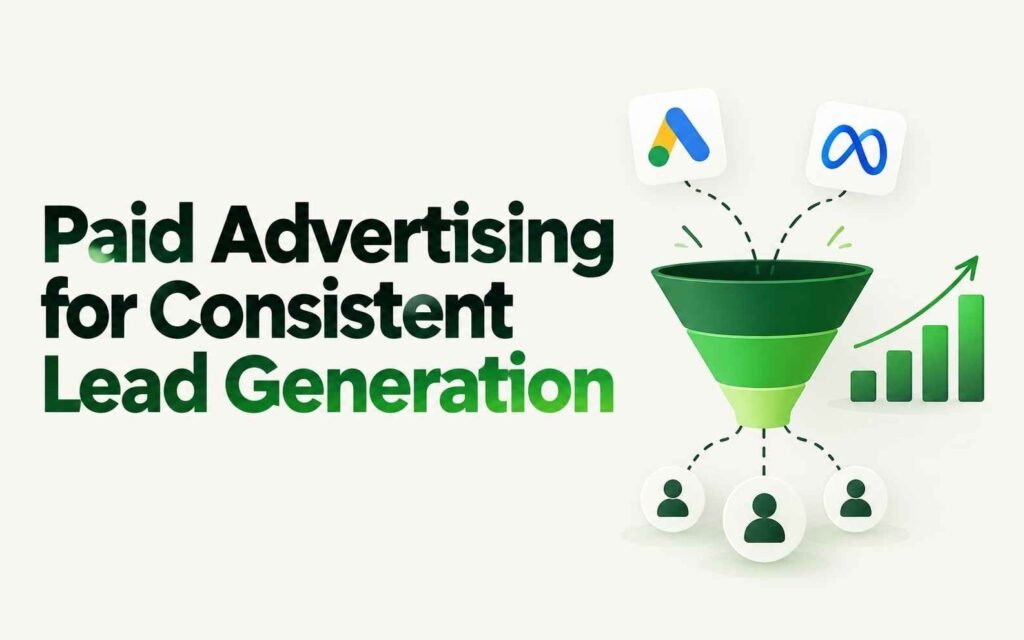
The real goal of paid advertising is not simply to get a few leads today. It is to build a system that can continue bringing potential customers into your business.
This requires several parts working together:
- The right audience
- Relevant keywords or targeting
- Clear ad messaging
- A strong landing page
- Accurate conversion tracking
- Fast lead follow-up
- Regular campaign optimization
When these parts work together, advertising becomes easier to measure and improve.
Final Thoughts
Paid advertising can be a powerful way to create a steady flow of new business, but success depends on more than launching a campaign and waiting for leads.
You need to reach the right audience, use relevant messaging, send visitors to a useful landing page, track important conversions, and improve your campaigns based on real data.
For businesses that depend on new customers, paid advertising for consistent lead generation can become an important part of a long-term marketing strategy when it is managed with the right goals and tracking in place.